
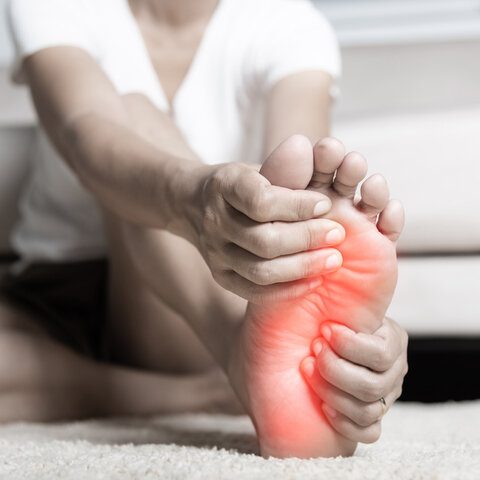
Foot Pain
Plantar Fasciitis, Hallux Rigidis, Osteoarthritis, Sporting foot pain
What causes foot pain?
Foot pain can stem from a variety of common causes, often arising from everyday activities or underlying health conditions. Some of the most common causes include plantar fasciitis, big toe pain, osteoarthritis and sporting injuries. Each leading to discomfort in different areas of the foot.
Signs and symptoms of plantar fasciitis
- Pain and tenderness of the sole of the foot, particularly the heel bone area
- Worse following a period of rest and first thing in the morning
Signs and symptoms of hallux rigidis (big toe pain)
- Pain on raising the big toe
- Stiffness or reduced movement of the big toe
- Warmth or redness of the big toe
- abnormal shoe ware
Signs and symptoms of Osteoarthritis
- Persistent pain and swelling around the foot
- Night pain
- Stiffness following a period of rest from activity
- Clicking and grinding feelings
Signs and symptoms of sporting foot conditions
- Significant bruising or swelling following a trauma
- Weakness of the muscles around the foot
- Difficulty baring weight whilst walking
It is important to be aware of more serious conditions that may require professional intervention such as undiagnosed diabetes, gout or rheumatic disease.
How Can PhysioCymru Help Me?
- Advanced Physiotherapy assessment of the foot, ankle and biomechanics
- Hands on manual therapy including massage and joint mobilisations to improve mobility in the foot and ankle
- Acupuncture for pain relief and to relax tight muscles
- Laser and shockwave therapy - Evidence for success in plantar fasciitis
- Steroid injections - including plantar fascia and big toe joint
- Personalised strength and balance exercise program
- Advice about the use of alternative treatments and medication options
What if physiotherapy does not help?
Having a close working relationship with a local podiatry clinic and a Consultant Orthopaedic Foot and Ankle Surgeon an early referral on for specialist assessment will be recommended and faciilitated if required. In some cases, orthotic devices may be recommended to provide additional support. For more severe cases, further intervention, such as surgery, may be considered to alleviate pain and restore mobility.