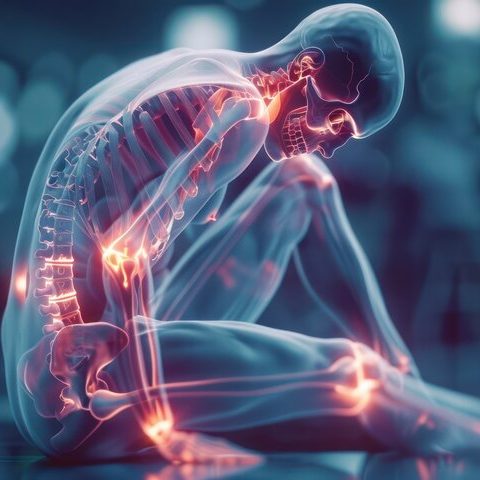
Fibromyalgia is a long‑term condition characterised mainly by widespread musculoskeletal pain, persistent fatigue and poor sleep. It does not cause visible joint harm or progressive tissue problems but is thought to involve altered pain processing in the brain, sometimes called central sensitisation. The condition is common and is diagnosed clinically after other causes have been excluded.
What causes Fibromyalgia?
The exact cause of fibromyalgia is unknown, but a combination of genetic predisposition, previous infections, physical trauma, repeated stress and disturbed sleep patterns appears to contribute.
What are the signs and symptoms of Fibromyalgia?
Typical signs and symptoms include widespread aching and stiffness, multiple tender points or areas of increased sensitivity, overwhelming tiredness, un-refreshing sleep, difficulty concentrating or “brain fog”, headaches, irritable bowel symptoms and mood changes such as anxiety or low mood. Symptoms often fluctuate and can be triggered or worsened by activity, poor sleep or stress.
How can I help myself?
You can help yourself through pacing and keeping an activity diary to gradually increase tolerance, starting with low‑impact exercises such as walking, swimming or Tai Chi, and using heat, gentle stretching and relaxation to ease symptoms. Good sleep habits, stress‑management techniques (mindfulness, breathing exercises), a balanced diet, smoking cessation and maintaining a healthy weight often make a meaningful difference. Peer support groups and reliable online resources can also provide practical tips and encouragement.
How can PhysioCymru help me?
Individualised assessment Personalised graded exercise program Laser therapy and laser acupuncture Local Cryotherapy Manual hands on therapy Hydrotherapy Gym sessions
What can I do if physiotherapy doesn't help?
Fibromyalgia often requires long term self management stratergies. If Physiotherapy does not help then a referral to a Pain Management Consultant or further discussion with your General Practitioner would be helpful
We need your consent to load the translations
We use a third-party service to translate the website content that may collect data about your activity. Please review the details in the privacy policy and accept the service to view the translations.
This site uses third-party website tracking technologies to provide and continually improve our services, and to
display advertisements according to users' interests. I agree and may revoke or change my consent at any time
with effect for the future. Privacy PolicyConfigure